
Blog posts tagged "ARM"
Microsoft has announced the preview of Azure Cobalt 200, its second-generation custom Arm silicon. Learn how Ubuntu and Ubuntu Pro support these new VMs from day one, offering seamless deployment, long-term security maintenance, and Kernel Livepatch without requiring engineering or platform changes

Today Canonical, the publishers of Ubuntu, and Google Cloud announced the immediate availability of optimized Ubuntu images for the new Axion-based N4A virtual machines (VMs) on Google Compute Engine.
Canonical and MediaTek enhance reliability, accelerate market entry and reduce Total Cost of Ownership (TCO) for ODMs through Ubuntu Certified Hardware and Arm SystemReady programs The hardware ecosystem is evolving rapidly, presenting a continuous challenge in ensuring that new hardware is market-ready and meets software and security st
With the release of Ubuntu 24.04 LTS (Noble Numbat) and Ubuntu Core 24, Canonical introduced a 12-year Long Term Support commitment for 32-bit Arm® processors, addressing the critical time_t overflow issue, commonly known as the “Year 2038 problem.” These processors, essential for critical IoT devices requiring a smaller DRAM footprint an
We are happy to announce that Ubuntu Pro is now available on Arm series Virtual Machines on Google Cloud. You can now launch or upgrade Ubuntu Arm instances to Ubuntu Pro on Google Compute Engine. Arm series Virtual Machines on Google Cloud Renowned for their exceptional performance per watt efficiency, Arm-based chips have become ubiquit
Ubuntu Core, Arm SystemReady and PSA Certified are transforming how the industry think about connected edge devices, security and device compatibility. [14 March 2023, Embedded World, Nuremberg.] Canonical today announced its Ubuntu Core operating system (OS) is now compatible with the Arm® SystemReady™ IR system specification. In additi
Canonical and Microsoft collaborate with Arm to enable .NET for Ubuntu hosts and containers on Arm Arm, Canonical and Microsoft are collaborating to deliver an improved experience and performance for .NET on Arm .NET 6 for Ubuntu 22.04 containers is now supported on Azure Kubernetes Service on Arm The ASP.NET, .NET SDK and .NET runtimes

With over 100 applications available in the Snap Store, KDE is by far the biggest publisher of snaps around. What unifies this impressive portfolio is the fact that all of these snaps are made for the x86 platform. Not anymore. Now, don’t panic! The x86 snaps are not going anywhere. But ARM-supported KDE snaps are
Canonical announces an optimized Ubuntu image for the preview of Ampere Altra Arm-based Microsoft Azure Virtual Machines. Azure users will benefit from running Ubuntu, the most popular cloud operating system, on a secure, scalable, and highly cost-effective cloud infrastructure. Arm-based architectures are ideal for computing workloads in
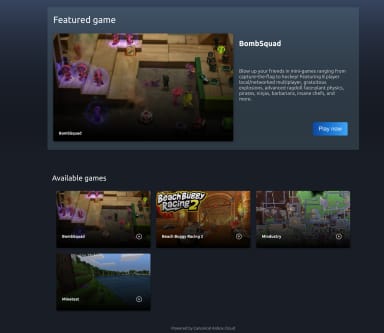
At GDC 2022 Arm, Ampere Computing and Canonical will present a live talk accompanied by a cloud gaming demo built on top of Ampere Altra powered servers running Anbox Cloud providing a cloud gaming service visitors can try live in the Arm booth #S756 Anbox Cloud was built use case agnostic, but cloud gaming has
Today, Canonical, the company behind Ubuntu, announces that Canonical’s Distribution of Kubernetes (CDK) is now commercially available and supported on processors and servers based on 64-bit Arm® v8-A architecture. The data centre is evolving to support new workload requirements, it is transforming to be optimised for workloads such as: 5

At Canonical, we’ve been doing work to make sure Ubuntu OpenStack deploys on ARM servers as easily as on x86. Whether you have Qualcomm 2400 REP boards, Cavium ThunderX boards, HiSilicon D05 boards, or other Ubuntu Certified server hardware, you can go from bare metal to a working OpenStack in minutes! The following tutorial will walk
Beginning in March, I have been assigned to the Linaro organisation to carry on the work with the LITE (Linaro IoT and Embedded) group by researching design and development of software for ARM-based gateway devices. One of my main focus points has been to investigate how complex it would be to run EdgeX on ARM.
The LS1043A, NXP’s quad-core ARM 64bit-powered SoC, is built for embedded networking and IoT Gateways with high throughput needs. Ubuntu Core is a versatile operating system for IoT and networking equipment based on snaps, the cross-platform Linux package format. Device manufacturers can use snaps and branded stores to quickly go from dev
IoT World was an eye opener for many. The same open source operating system that everybody loves from the cloud now powered the first smart fridge with apps from GE, the first Ubuntu Core drone with apps from Erle-Robotics, industrial gateways with apps, Pengiun Computing professional top of the rack switches with apps, Acer smart home hu
For Mobile World Congress we purchased the cheapest Intel server with 6 ports from the Amazon Store: After installing Snappy Ubuntu Core and working with partners like Microsoft, F5, Dataart, Cybervision, Forgerock, ARM, Balabit, Zabbix, etc. and the Ubuntu Core engineering team, the server became this: A switch, firewall and load balance