

Igor Ljubuncic
114 posts

In essence, High Performance Computing (HPC) is quite simple. Speed and scale. In practice, the concept is quite complex and hard to achieve. It is not dissimilar to what happens when you go from a regular car to a supercar or a hypercar – the challenges and problems you encounter at 100 km/h are vastly

The term High Performance Computing, HPC, evokes a lot of powerful emotions whenever mentioned. Even people who do not necessarily have vocational knowledge of hardware and software will have an inkling of understanding of what it’s all about; HPC solves problems at speed and scale that cannot be achieved with standard, traditional comput

There are three types of computer users: the end user, the system administrator, and the involuntary system administrator. As it happens, everyone has found themselves in the last group at some point or another; you sit down to perform a task relevant to your needs or duties, but suddenly the machine does not work as

What do drones, elementary particles, air hockey, and the film industry have in common? At first glance, not much. But after giving it some thought, you may realize that, in fact, they do share a rather similar theme. Two words: Ubuntu Summit. The second installment in the reboot series of the Ubuntu Summit will take

‘E’s not pinin’! ‘E’s passed on! This base is no more! He has ceased to be! ‘E’s expired and gone to meet ‘is maker! ‘E’s a stiff! Bereft of life, ‘e rests in peace! If you hadn’t nailed ‘im to the perch ‘e’d be pushing up the daisies! ‘Is software processes are now ‘istory! ‘E’s

Welcome to the second article in the Craft team saga. Previously, on Craft Team, we gave you a brief introduction into the team’s function, we announced our desire to share the ins and outs of our day-to-day work with the community, and gave you an overview of roughly two weeks of coding and fun. Today,

Snapcraft, Charmcraft, Rockcraft … you may have heard of these tools, but have you ever wondered how – and by who – they are developed? These tools are the intellectual and keyboard-driven product of Canonical’s Craft team. Officially, the team’s name is *Craft, and the asterisk symbol can easily be seen as a “star” (The

About a year ago, the Advocacy team established first contact with Savoir-Faire Linux, a free software consultancy company behind Jami, a privacy oriented VoIP and conference platform. The Jami developers were interested in some sort of collaboration with us, and shedding fresh light on their product. Intrigued by their technology and bus
This article was written by Merlijn Sebrechts and Dani Llewellyn from the Snapcrafters community. ===== Last year, we officially re-launched the “Snapcrafters” initiative. We’re a community of volunteers who build and maintain unofficial snap packages. Although snaps make it easy for developers to publish their software directly to users,

One of the core aspects of the snap ecosystem is the built-in, robust auto-update mechanism. Whenever there is a snap update available in the Snap Store, the snapd service will apply it, keeping your software patched and up to date. Most of the time, this works great. In some scenarios, though, this may not be

Automatic updates grant snap users an ability to receive timely patches to their software, both in aspects of security and functionality. This can be rather useful and convenient, especially for applications that have online access. On the other hand, automatic updates can potentially disrupt users’ workflows if they happen to coincide. B

With over 100 applications available in the Snap Store, KDE is by far the biggest publisher of snaps around. What unifies this impressive portfolio is the fact that all of these snaps are made for the x86 platform. Not anymore. Now, don’t panic! The x86 snaps are not going anywhere. But ARM-supported KDE snaps are
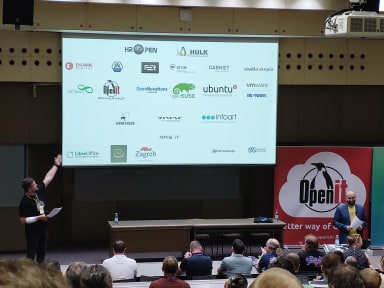
A Linux conference almost as old as Linux itself. In mid-May, DORS/CLUC hosted its 29th event at the Faculty of Electrical Engineering and Computing in Zagreb, Croatia. With a long history of participation and contribution to open source communities, Canonical was one of the sponsors at the conference, with a busy schedule that included a

As part of their fundamental, security-driven design, snaps are meant to run isolated from the underlying system. In most cases, the idea works well, and granular access to system resources using the mechanism of interfaces allows snap developers to ship their applications packaged with strict confinement. However, there are some scenario
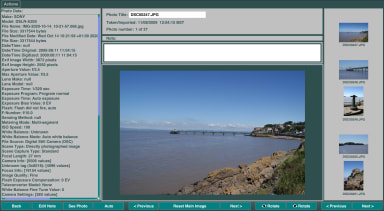
This article was written by Alan Watson, with only small cosmetic changes from me. Having stumbled upon PhotoNoteBook, I asked Alan to write a guest blog post and share his project with the wider snap developer community. ===== The idea for PhotoNoteBook was seeded in 2018 after watching a Double-Glazing salesman measure my windows. He

In the last two days of April, the small, picturesque town of Rovereto in northern Italy was the location of this year’s Linux Application Summit (LAS). After a virtual-only experience during the pandemic, the LAS returned with a physical presence, and so did we. Canonical has long recognized the value and importance of LAS as